
Revisiting the portmanteau structure of Night on Earth (1991), the inherent coolness of his signature style portrayed in Coffee and Cigarettes (2003), the quietness and intimacy of Paterson (2016), Jim Jarmusch delivers a new film that serves as an opportunity for creative introspection. It is a testament to the good but challenging, unsettling cinema we forgot we needed. Slow-paced to the point of flirting with stillness, this dark comedy depicts all the claustrophobic absurdity of familial relations that make no sense, simply because they do. There is no over-intellectualising, no obvious conflict and no resolution in the premise of the film.
There is, however, a deeply experimental, textured treatment of time; time that is not cinematic or adhering to narrative linearity, but actual time. The minutes, seconds, milliseconds depicted on screen are the exact same, quantifiable portions of time we experience when watching the film. And that makes a great premise to reckon with precious time, and a warm invitation to inhabit it.
With charismatic Tom Waits leading, naturally, an exceptional cast of actors Father, Mother, Sister Brother don’t try to be something. They just are: wonderful, imperfect, charismatic, alluring, absurd, irritating, slow, deeply flawed and human. These attributes don’t necessarily stay contained within the film world, however. Rather, they spill over to a meta-narrative, intertextual level, to define our relationship with the filmmaker —a title that he most certainly wouldn’t choose for himself. It is a relationship we sustain insofar as we connect with his vision, values, artistic integrity, but it is not immune to the natural friction that occurs when our expectations are not always met in this film. With moments of brilliance, especially in its treatment of time, and the freedom inherent in his aesthetic signature, Jarmusch’s newest film will not disappoint those who treat precious time as a provocative, thought-stimulating experience. It succeeds if the viewer accepts the challenge to acknowledge the quiet, slow pace; and if they choose to see this as a form of cameo expressed through the rejection of quick cuts, fast pace, and fragmentary cinematic experiences that define a post-digital ‘always, anytime anywhere’ culture. Notwithstanding the above, while the invitation to expand towards this metanarrative level remains compelling, it reveals a story that can become somewhat repetitive and circular, relying on repeated motifs to slowly move the plot forward.
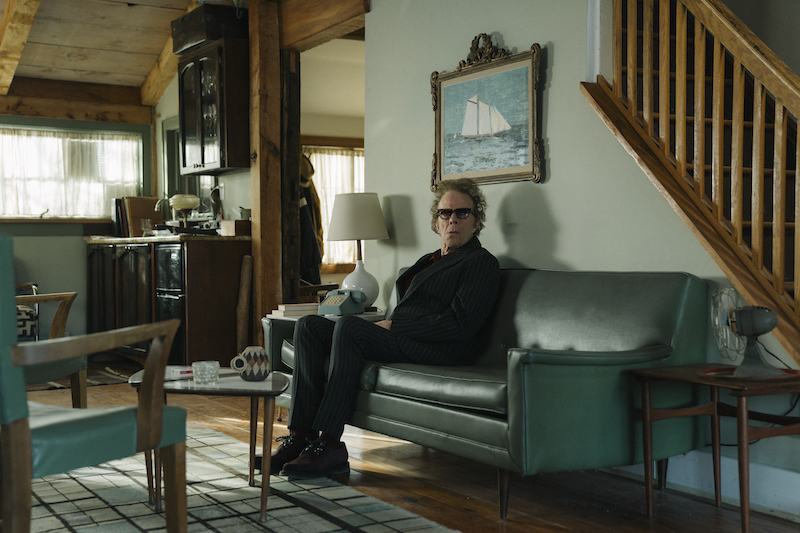
But let’s take it from the top. The narrative itself is a triptych of vignettes, each focused on the friction between adult children and distant parents. While the abstract quirkiness of the maternal and paternal figures, who are played wonderfully by stalwart actors, seems to be the root of the distance, awkwardness and discontent, the children experience it in way that stretches the moments of realisation while contracting the very timelines that have led them there. In the rural Northeastern USA, a hermetic and slightly ambiguous father (Tom Waits) receives a rare visit from his children, Jeff (Adam Driver) and Emily (Mayim Bialik). We experience their long drive to his house, their small talk, their venting, gossiping about their father, the quiet comfort of a big family car that allows us to almost feel the leather seats. Upon arrival, they are met with a figure they can hardly relate to; when they finally do, they feel a striking incompatibility as adults facing another adult, whose wrist is embellished with an expensive-looking Rolex watch. As they enter his peaceful house, sit on his vintage sofa and gaze at the frozen lake to avoid eye contact, the silences are felt —not because they acquire an emotional tone, but because they can almost be heard though the ticking of the clock, and the watch potentially.
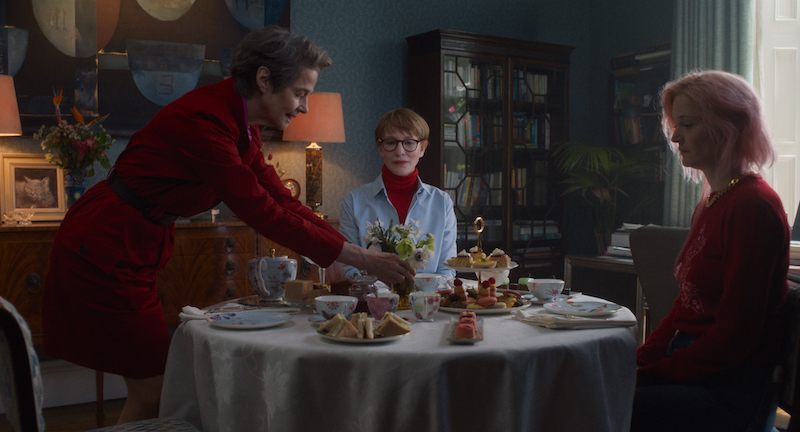
This temporal tension travels across the Atlantic as the focus shifts to Dublin. A famous, widely popular author of tawdry romantic fiction, wonderfully played by Charlotte Rampling, transforms into a cold, strict, polite but unaffectionate matriarch as soon as she enters the carefully crafted exterior of her spacious abode. Refined, sleek and well-mannered, she is an ironic figure to both the spectators and her daughters, who find it impossible to reconcile her rigid persona with the creative consciousness that dictates her sultry books. We meet her as she hangs up on her therapist to perfect the art de la table for the annual afternoon tea with her two daughters: the conservative Timothea (Cate Blanchett) and the rebellious Lilith (Vicky Krieps). Driving independently to the maternal home, the sisters keep their secrets at a safe distance, adopting a hereditary behaviour of privacy. As they meet, they can’t help but leaf through their mother’s forbidden books—perhaps the only spontaneous moment in the segment, screaming 'life' into an otherwise stifling setting. This creative impulse is the only intervention that makes the women connect, except for Lilith’s fake Rolex, which makes a dramatic entrance to temporarily revitalise the atmosphere before the quiet pauses return. The scenes around the table are excruciatingly awkward; while their hands pour tea and their mouths speak, it is the cold, transactional tone and the hesitation in-between words that create a suffocating experience. Every sip of tea and reach for the sugar is a quantified process designed to make time disappear—a futile attempt to ignore the time that hasn't passed since they last checked. It is impossible not to be amused by the absurdity, facilitated by exceptional acting, with Blanchett’s transformation serving as a highlight of the segment.
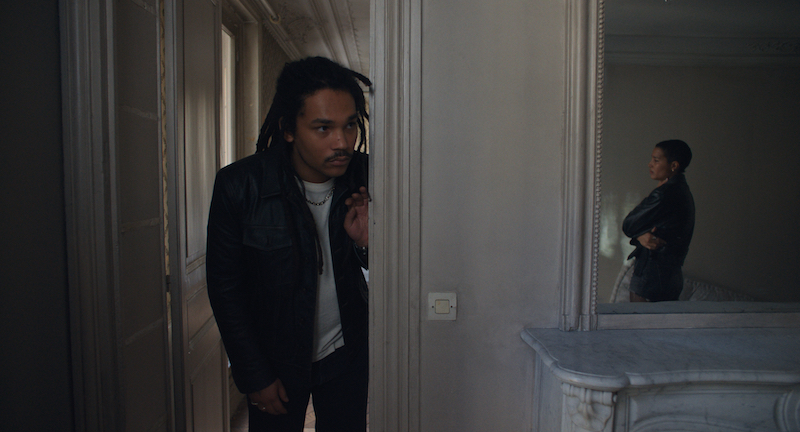
Finally, in Paris, fraternal twins Skye (Indya Moore) and Billy (Luka Sabbat) meet to clear out the apartment of their deceased parents, uncovering secrets that refuse to stay buried. While this is the only segment where the parents are absent, it is perhaps the one in which they are most emphatically present through the traces of their lives: personal items, books, certificates, and photos. Driving their vintage car through the narrow Parisian streets, the twins stop at a café for what appears to be a much-needed 'Coffee and Cigarettes' moment—minus the cigarettes. The close-up of the table and their small rituals are so vivid that we can almost sense the aroma of freshly ground coffee filling the air; it is a comforting scene that demands each moment be savoured in a slow, cool manner.
The warmth and closeness of the twins offer a stark contrast to the cold, performative interactions of the previous segments. Skye and Billy try to make peace with the fact that they will only ever know fragments of their parents—who they were when they were young, and why they chose a secretive, unconventional lifestyle. Time spent in the empty flat is a blend of grief, familiarity, and love, as they come to terms with all that will no longer be, save for their memories and their father’s original Rolex watch, now around Billy’s wrist.
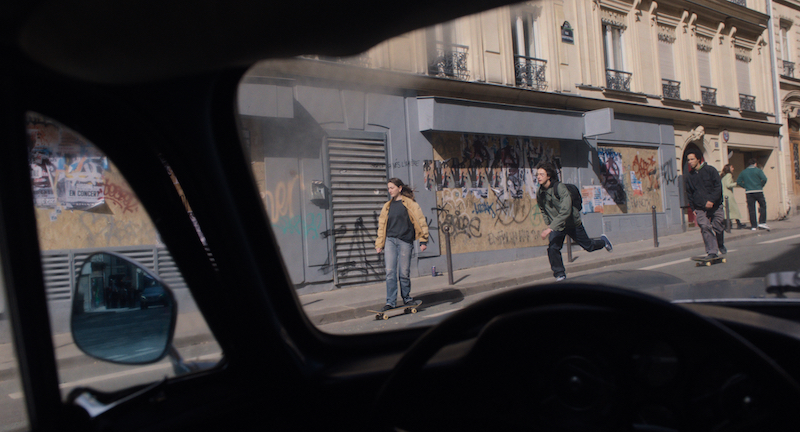
In each chapter, Jarmusch treats the 'plot' as secondary to the presence of the actors; the drama resides not in what is said, but in the heavy, quantifiable passage of seconds between words and the motifs that stand in for lifestyle choices and principles. The recurring image of young skaters, casual conversations about drugs, and the Rolex comprise narrative threads connecting the segments in a loose commentary on life itself—a cordial invitation to reflect on how we choose to connect with the film. However, this reflective approach may temporarily alienate spectators who don’t expect to be put in the same place, as his main characters: encountering someone they know in an endearing premise while keep wondering who they truly are now; if they ever actually knew them. The crux of the matter is indeed this very treatment of time, while compelling —not just from a purely intellectual, philosophical or aesthetics perspectives— it becomes inadvertently political as it introduces a branded motif, a Rolex watch, as a stand-in. Whether intentional or not, this choice leaves a tangy taste of metal marinated in commercialisation, allowing neoliberal capitalism to creep into the frame and remind everyone that time is indeed money, especially within the container of an independent film. While off-putting at first, it serves as the pharmakon (the medicine and the poison Derrida, 1972)— inducing friction or potentially acute reactions, that do not dissolve, as one leaves the cinema. The film encourages us to sit with this discomfort to identify what it might mean, not in lieu of a self-indulgent reflection but as a form of resolution; a catharsis at the metanarrative level revealing how we measure our precious time. And that makes a very intriguing and valuable cinematic experience.
By Eirini Nikopoulou
Info:
Father, Mother, Sister, Brother (2025)
Written and Directed by Jim Jarmucsh. Cast: Tom Waits, Adam Driver, Mayim Bialik (USA); Charlotte Rampling, Cate Blanchett, Vicky Krieps (Dublin); Indya Moore, Luka Sabbat (Paris). Cinematography: Frederick Elmes, Yorick Le Saux. Original Music: SQÜRL. Produced by: Joshua Astrachan, Carter Logan, and Anthony Vaccarello (Saint Laurent Productions). Runtime: 112 minutes. Distributor: MUBI (UK). Father Mother Sister Brother is available in UK cinemas from 10 April onwards.